Rick Keene Music Scene: The Montreal International Jazz Festival; A Chat with Taj Mahal
Very few musicians can utilize the description ‘Legend’ as an introduction. Taj Mahal is one of those musicians.
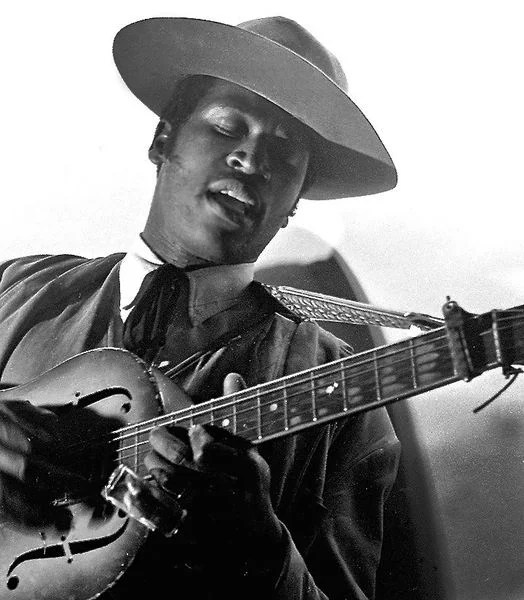
Taj Mahal – 1968
Multiple Grammy awards, a catalogue as diverse as music itself and collaborations with every person who was or is – worth their weight in gold. At eighty- four years of age, Taj Mahal is one of the few remaining links to the eras when music was all about integrity and feel.
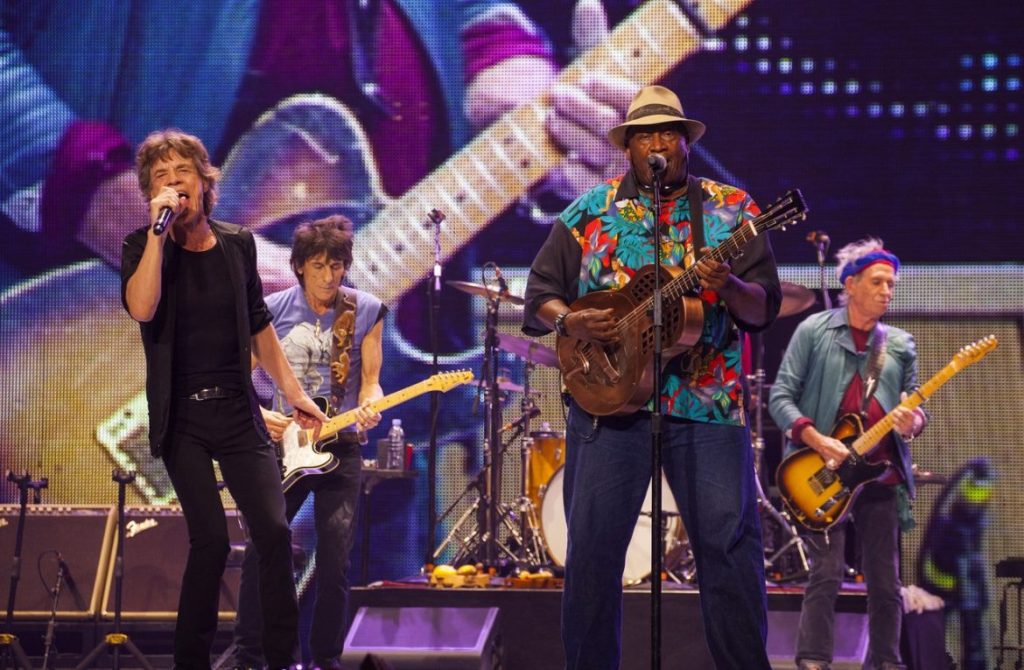
The Rolling Stones are also now part of that exclusive group with links to the past. The Stones were also a very important part of re-introducing people such as Taj Mahal back to the American people and the world in general.
“Yeah, yeah, yeah, well they introduced the world to us”. Explains Taj. “We knew who we were, but we didn’t have the apparatus to be able to tell everybody who we were. You know they did a good job. They love the music and that’s exactly why they have lasted longer than everybody else. Because it’s in them. They go back to the source. All the time. All the other guys, they go get something and then they come forward and they never go back to the source. The Stones honored and continue to honor the source and no matter what genre they do, the blues is in them.”
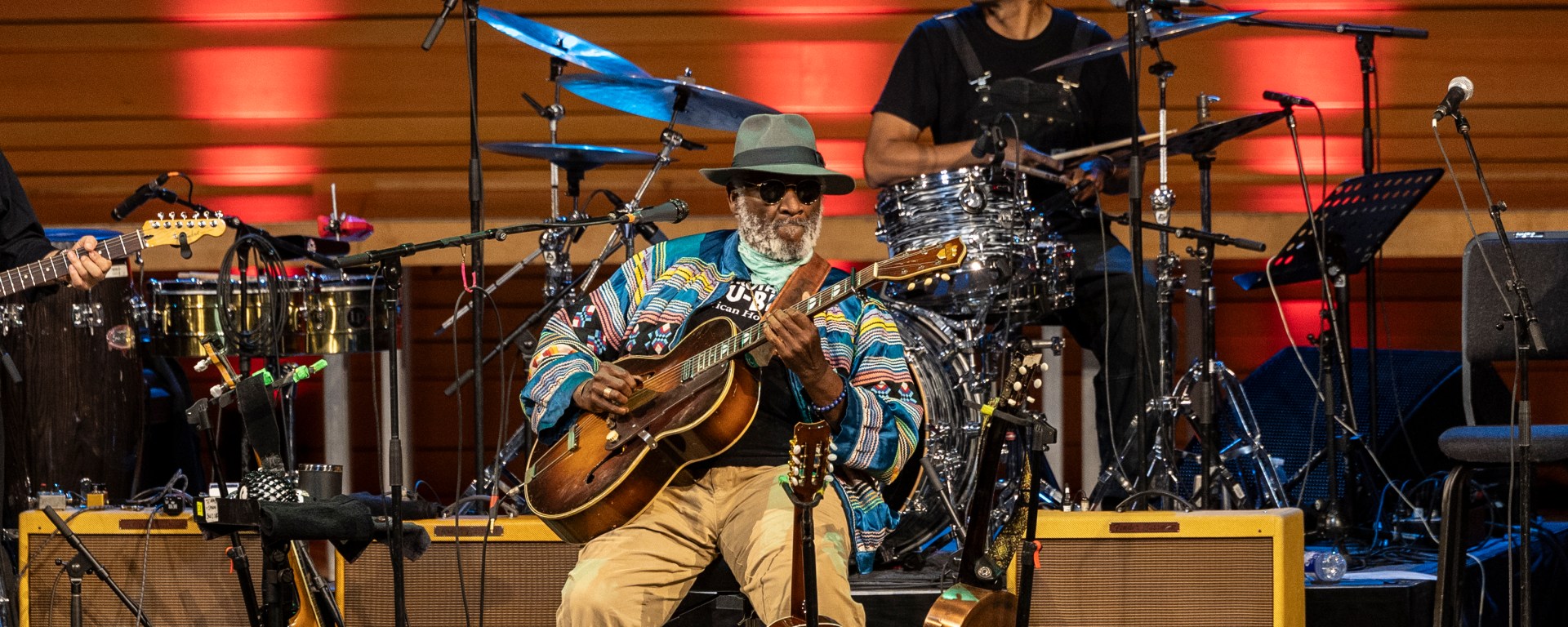
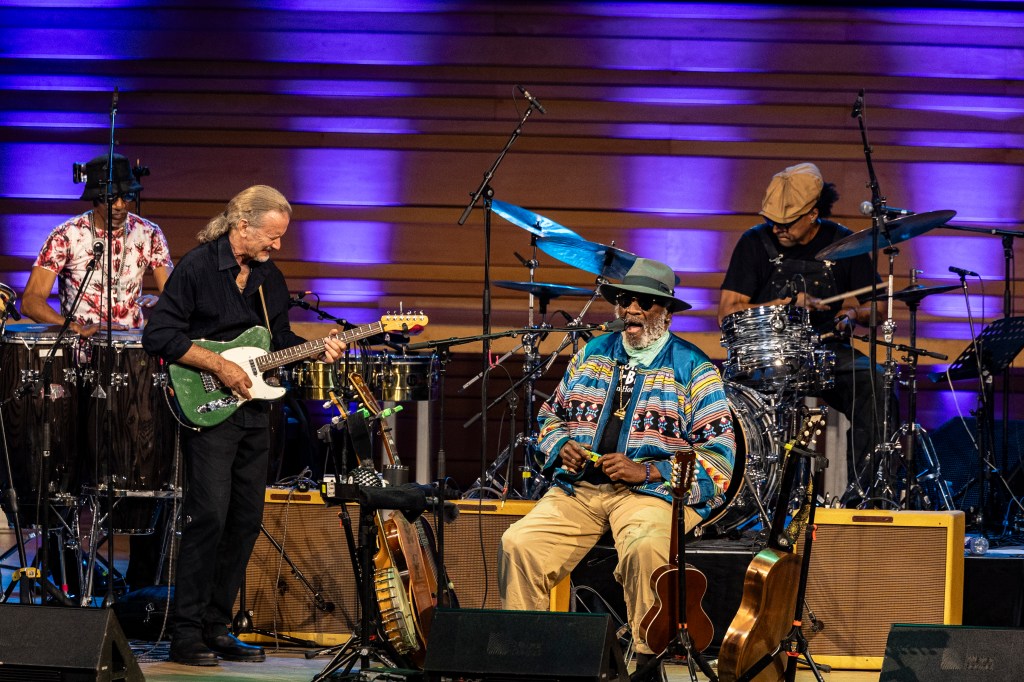
Taj Mahal Montreal Jazz festival 2026 Photo Frederique Menard Aubin
The Blues has changed over the years and has multiple avenues such as the Chicago Blues, Delta Blues and British Blues to name just a few. According to Taj – the record labels had a lot to do with the ever-changing changing Blues; good and bad.
“What has happened to the blues people in America, is that they kept being told that’s good, but change it, change it to something more modern. So, everybody sees a bunch of people who know the old music, and then you got a bunch of people who know the new music. And the new people don’t know the old music, but the old people know the new music. Because they, are very centered. I mean, they don’t know everybody who’s new, but they know what the sound of the new music is. The decades are going further and further away so the new generation are getting even more lost. I mean the general people who listen to popular music.”
Although the general population may not know or understand the importance of The Blues – the new generation of Blues players are very much alive and thriving.
“The young blues people, there are a lot of more wonderful blues, it’s in a great, the best shape it’s ever been for young people right now. There are festivals everywhere and you know, you see 17-year-old girls playing The Blues. There’s a couple of girls from Ireland that are really good and from Canada. you have Sue Foley who I have played with and she is so good. I don’t care where you come from. You can come from Afghanistan. You know how to play the blues.”
Taj Mahal’s Father was a musician and because of that – Taj grew up in a house where musicians from all over the world would be around playing around him almost daily. The Blues plus many genres of world music were all early influences for Taj Mahal which he later incorporated into his own vast catalogue. The Rolling Stones also went on to incorporate all genres into their music, yet Taj Mahal never spoke to them about that except to the founder and multi – instrumentalist; Brian Jones.
“I met them – let’s see. They started about in ’63. I met them in ’68. So about five years after that before the Rock and Roll Circus. I used to be in a club from ’65 till about almost ’67. I was working in this club. 1966. I was working with the Rising Suns. But I also worked in this club, and they used to come in, the Stones, the Animals. You know, Johnny Cash, people like that.” Taj continues. “The club was really good and only the old guys like Lightnin’ Hopkins, Mississippi John Hurt, Bukka White, Son House and Stevie John Estes played there. The Stones and I didn’t have conversations about world music or different genres, but I did speak with Brian Jones about it. Brian was telling me about North Africa and this place called Essaouira, which is where the Gnaoua are. They are very interesting people. They were sub-Saharan people who were brought up with the slave trade but ended up living in this city and they had a sacred music that they never played for like 300 years. So now that became the music of that area. Brian was telling me about it back in ’68, because he had traveled over there. Yeah, Brian was very adventurous and creative.”.
Taj Mahall and The Rolling Stones
One of Taj Mahal’s most recent collaborators is Keb Mo. The duo has done two albums in the past nine years, and Keb is someone Taj met before Keb became a household name.
“Keb was a young man trying to get into the music business.” Explains Taj. “Before that, he was a young man in high school, and I came with my band back in late ’60s. He was just a 17-year-old high school kid. We brought our band there with The Chambers Brothers, my band. Someone told him, ‘you should go see there’s a guy coming and playing some music’. So, Keb went and saw me, and it was confusing to him. Because it was definitely The Blues to him, but Keb knew the Blues from his own background, Louisiana and Texas. The Blues to him were Muddy Waters, B.B. King, T-Bone Walker, Jimmy Witherspoon and maybe Jimmy Rushing and Big Joe Williams. So it was, you know, kind of interesting to him. So, he went and saw the show twice. We played two shows. One in the morning, one in the afternoon. He saw both shows and left kind of confused, but it opened up his world a little.”
At that time, Keb Mo was playing guitar, steel drums, bass, a lot of different things and he was working with different people. Somebody gave Keb a cassette of the natural blues and it was in his car for a couple years. Every time he got in the car, he listened.
“I began to hear about him when somebody kept saying, you know, this guy named Keb’ Mo’. This guy named Keb’ Mo’. Keb’ Mo’. Keb’ Mo’. Keb’ Mo’. Keb’ Mo’. You know. And so, I remember people were telling me this was a young black guy playing guitar and he sounds like you, or at least we think that about him. I was interested because there really wasn’t anybody out there doing what I was doing for a long time.”
Taj continues …
“A friend of mine, Chick Streetman, who was a guitar player said, whenever you come to Los Angeles, I’ll introduce you to Keb. I said, well, I’ve been hearing about him, and everybody keeps saying this, that and the other thing. So, when the Phantom Blues Band recorded in 1993 in Los Angeles, we’re in LA, and my friend Chick got a hold of Keb’ Mo’ and brought him over to the studio. Keb was smart enough to have a demo tape in his pocket. We took a break and I asked if they’d have a tape recorder and we put a tape and everybody went like … ‘woo”. That producer, John Porter, started out with Keb and that’s when Keb got his first deal. Keb made two albums with John and went on to start recording and producing his own stuff after that. Keb and I started playing together and we were playing in different places on the road and in the same festivals. We struck up a good friendship and at one point, I said, man, when are we going to do something together? We need to do something.
Taj Mahal and Keb Mo didn’t need management or anyone telling them what to do. Between them – they had a lot of ideas and quite a few very interesting thoughts.
“You know, so I love working with Keb because I produce, but I’m a different kind of producer. I shoot from the hip and whatever I get, I’m happy. Keb takes his time, he’s very methodical about it. We’re connected to the greater African continental tradition throughout the diaspora. We are connected to The Blues, The Blues’ composers and the guitarists. There’s a lot of different kind of things that are out there and we are connected by that curiosity. We are connected by magic and chemistry.”
Keb Mo and Taj Mahall
Taj Mahal’s Father passed away tragically and suddenly when Taj was eleven years old. He left behind a musical education for the young Taj.
“Well, you know, I was able to move on and do the right thing, find some good. I followed examples of what to do, how to be a grown man. The music, the culture has always been very musical. It’s always been very full. You know, so I was lucky to have that. I didn’t know how full it was until years later when the record industry took over. You know, the business and all the things. A lot of things dried up that used to be available. Trends they come and go but the blues is the one constant. Blues and country and I think Jazz.
Taj doesn’t make plans and if ideas come – he will carry them out.
I don’t hardly ever plan anything. I’m moving along, as the ideas come, I do them. Usually what happens, every time, everything is different. There are different bands and I’m not under anybody’s contracts anymore. When I was with Columbia, I was under contract and I did eleven records for them. After that I was under Warner Brothers contract, and I did three records for them. After that I was mostly independent. Most of my stuff is independent until the early ’90s and then I got on a contract to do Private Music, I did about five or six records for them. Since then, I went back to independent and being on the road. Even in the ’80s, I made a lot of different independent records. Children’s music, country music, African music, you know, music in Africa with Africans, Senegal, Mali, those places. I’m not going to be dictated by no record company to destroy the art that comes to me, you know. This what comes, this is what I receive from my culture and DNA.
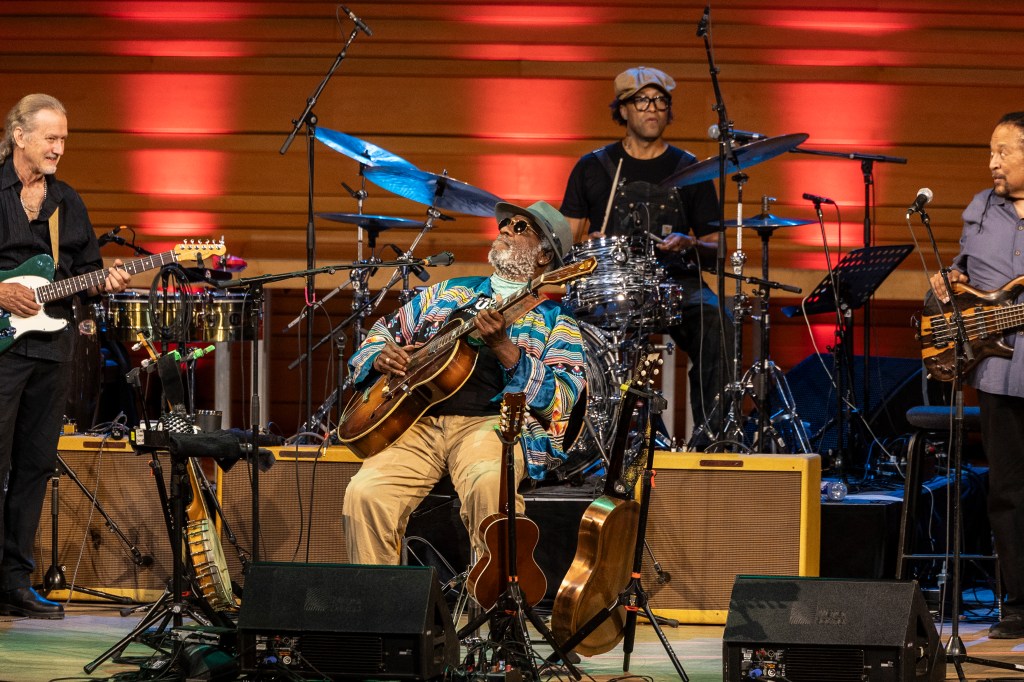
Montreal Jazz festival – photo Frederique Menard Aubin
When Taj is sitting around and ideas or inspiration come to him – different things can happen.
“
I don’t have what you call spirit time a lot of the time but I’m in time with it. It’s always pretty much in the same place. Like this morning, I woke up and my guitar was across the room and there was something I wanted to play, and I just picked it up and started playing. My door is always open for my muse.